Pain Nagato: The Villain Who Changed How We See Anime Antagonists
Before Pain’s assault on the Hidden Leaf Village, most anime villains followed a predictable formula. They were evil because the plot needed them to be. They wanted power, destruction, or world domination because that is what villains do. Then Pain appeared on screen and asked a question that shattered everything: “Do you understand pain?”
With that question, Masashi Kishimoto did not just create an arc — he created a philosophical reckoning that forced Naruto, and the audience, to confront the cyclical nature of violence, war, and suffering. Pain Nagato is not just one of the greatest anime villains ever written. He is the villain who redefined what an anime antagonist could be.
Here is a deep dive into why Pain resonates so powerfully with fans — and why Pain Nagato merch remains some of the most popular anime merchandise in India.
The Origin: Nagato, Not Pain
To understand Pain, you have to understand Nagato — the orphaned child of the Rain Village. Born during one of the Great Ninja Wars, Nagato watched his parents killed by Leaf Village shinobi. He and his friends Yahiko and Konan survived as war orphans, starving and scavenging in a country that the great nations treated as a battlefield.
This origin matters because it is not fabricated evil. It is not a demon possession or a cursed bloodline. It is the real, ugly consequence of war — children growing up in the rubble of decisions made by powerful people who never have to live with the fallout. For Indian fans familiar with Partition stories, with the human cost of geopolitical conflict, Nagato’s childhood carries a weight that transcends fiction.
Jiraiya’s arrival and mentorship gave the three orphans hope. For a brief moment, Nagato believed the cycle could be broken through understanding. Then the world took Yahiko from him, and that hope died.
The Philosophy of Pain
What makes Pain extraordinary as a villain is that his logic is not wrong. That is the terrifying part.
Pain argues that people only understand each other through shared suffering. That peace achieved through diplomacy is temporary because humans forget pain over time. His solution — creating a weapon of mass destruction that periodically reminds the world of suffering — is monstrous, but it is built on an observation about human nature that is uncomfortably accurate.
The Pain’s Assault arc is not a simple good-versus-evil confrontation. It is a debate. Naruto cannot defeat Pain just by being stronger. He has to answer Pain’s philosophy — and the series is honest enough to show that Naruto does not fully have an answer. He has a feeling, an instinct, a refusal to accept the cycle, but no neat solution. That ambiguity is what elevates the entire arc.
Indian fans, many of whom study philosophy and political science in college, have written extensively about Pain’s ideology online. The parallels to real-world theories of deterrence, to the concept of mutually assured destruction, to Ashoka’s transformation after Kalinga — these connections make Pain feel like more than a manga character. He feels like a case study.
The Rinnegan: Design as Storytelling
Pain’s visual design is a masterclass in using aesthetics to communicate power and philosophy. The Rinnegan — those concentric purple circles in his eyes — is one of the most iconic eye designs in anime history, arguably rivalling even the Sharingan in recognition.
The Rinnegan’s circular pattern suggests completeness, cycles, and the Buddhist concept of the cycle of rebirth (samsara). This is not accidental. Pain’s Six Paths technique is directly named after the Six Paths of Buddhist cosmology. His very power system is a philosophical statement about the nature of existence and suffering.
Then there is the Akatsuki aesthetic. The black cloak with red clouds has become one of the most recognizable designs in anime fashion. The clouds represent the “rain of blood” that fell on Amegakure during wartime — every member of Akatsuki wears the scars of their nation’s suffering as a uniform. The design works because it is simultaneously menacing and mournful.
Pain’s piercings add another layer — the chakra receivers that connect the Six Paths of Pain to Nagato’s will. They make his face look harsh, mechanical, almost inhuman. This is the point. Pain has literally transformed his body into a weapon. The piercings are a visual reminder that the person underneath — Nagato — has been consumed by his mission.
This rich visual language is exactly why Pain Akatsuki merch translates so well to fashion. The colour palette is versatile. The iconography is instantly recognizable. And the aesthetic carries meaning beyond just looking cool.
The Six Paths: Power as Metaphor
Pain’s fighting system is one of the most creative in Naruto. Rather than a single body with escalating power levels, Pain operates through six corpses, each with a distinct ability corresponding to one of the Six Paths of Buddhism:
- Deva Path — gravity manipulation (the “main” Pain, Yahiko’s body)
- Asura Path — mechanical weaponry
- Human Path — soul extraction
- Animal Path — summoning
- Preta Path — chakra absorption
- Naraka Path — interrogation and restoration
The fact that Pain uses his dead friend Yahiko’s body as his primary vessel is deeply tragic. It is both a tribute and a desecration — Nagato cannot let go of Yahiko, so he turns his corpse into a god. That single detail tells you everything about how grief has broken this character.
“Almighty Push”: The Moment That Changed Everything
When Pain levels the entire Hidden Leaf Village with a single Shinra Tensei, it is one of the most jaw-dropping moments in anime history. The crater. The silence. The scale of destruction.
But what makes this scene truly devastating is the context. This is the village that killed Nagato’s parents. The village that trained the shinobi who turned the Rain Country into a warzone. For Pain, this is not random destruction — it is justice. And the audience, having spent the arc understanding his perspective, cannot entirely disagree.
This moral complexity is what separates Pain from every generic anime villain who destroys things because they are “evil.” Pain destroys things because he believes it is the only path to peace. And the show respects the audience enough to let that sit uncomfortably.
Nagato’s Redemption and Legacy
The conversation between Naruto and Nagato after the battle is the emotional core of the entire series. Naruto does not defeat Pain with a jutsu. He defeats him with a promise — to find a real answer to the cycle of hatred, even if he does not have one yet.
Nagato’s decision to believe in Naruto, to use Rinne Rebirth and sacrifice himself to resurrect those he killed, is not a cop-out. It is the final expression of who Nagato was before the world broke him — a child who wanted peace. In his last moments, Nagato returns to being that child.
This redemption arc is why Naruto merch featuring Pain and the Akatsuki continues to outsell most hero-focused merchandise. Fans do not just admire Pain — they understand him. They feel for him. And that emotional connection drives demand for merch that lets them express that connection.
Wear the Philosophy
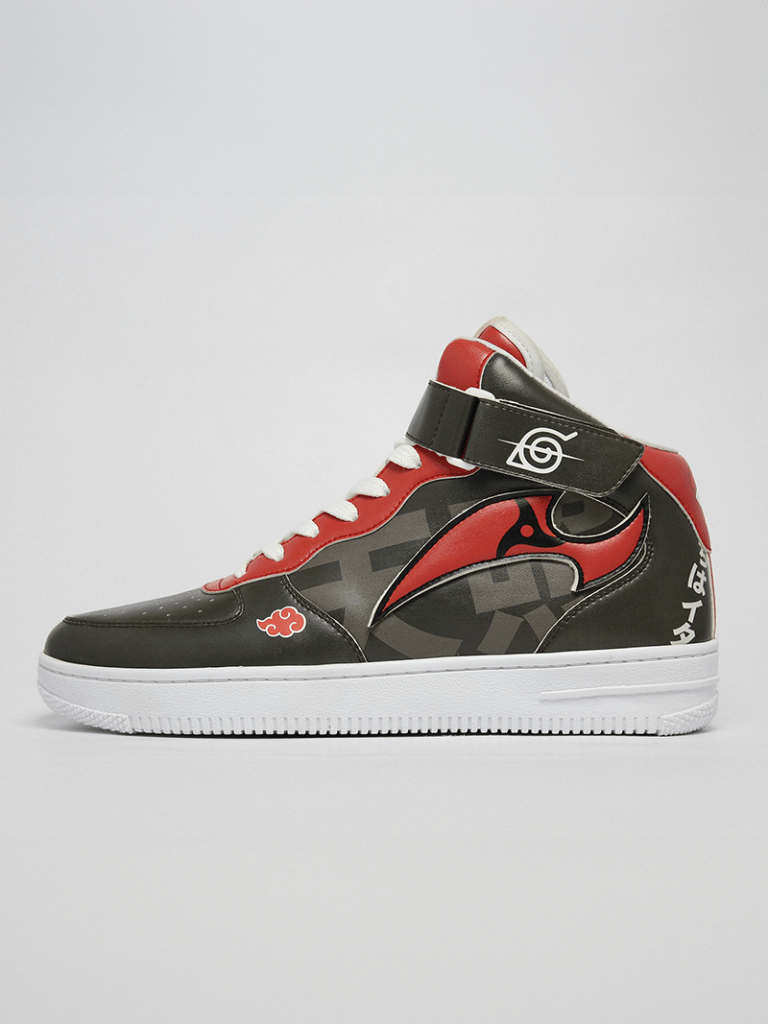
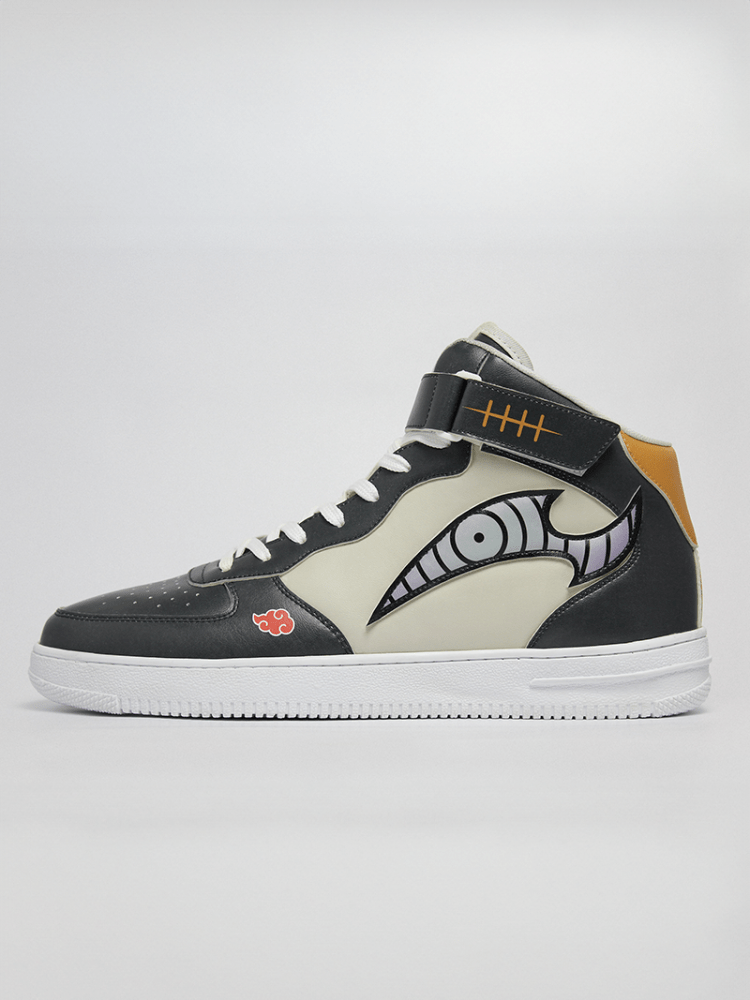
The Pain Akatsuki MidStrides capture the essence of everything that makes this character iconic — the dark aesthetic, the Rinnegan symbolism, and the Akatsuki design language. Every pair is handcrafted in India with attention to the details that fans care about.
At Rs. 2,699 with free shipping across India — or Rs. 2,499 when you pay online — these sneakers are not just footwear. They are a statement about which side of the Naruto universe you align with. And if someone asks why you are wearing villain merch, you can always ask them: “Do you understand pain?”
Related Posts