CS:GO Skins in Real Life: Gaming Culture Meets Fashion
Every CS:GO player knows the feeling. You are in a competitive match, clutching a 1v3, and what are you thinking about? Not the crosshair placement. Not the economy. You are thinking about how good your AK-47 Bloodsport looks in your hands. Skins do not give you better aim, but they give you something arguably more important: style.
For over a decade, Counter-Strike skins have been more than cosmetic items. They are status symbols, investments, and expressions of identity. And now, that aesthetic is breaking out of the game and into the real world. CS:GO fashion and gaming merch represent one of the most exciting crossovers in contemporary culture — where virtual design meets physical fashion.
Why Skins Matter More Than You Think
To non-gamers, the concept of spending real money on virtual weapon paint seems absurd. But skins in Counter-Strike (now CS2) are not just paint. They are a language.
Your loadout tells a story. A Dragon Lore AWP says you are either wealthy or you have been playing since the beginning. A Redline AK says you appreciate clean, understated design. A Fade knife says you value rarity over flashiness. And a Bloodsport? A Bloodsport says you want to be noticed.
This language of identity through design is exactly what fashion does. The parallel is not coincidental — it is structural. Both gaming skins and fashion exist to communicate who you are to the world. The only difference is the medium.
The Bloodsport: Design Analysis
The AK-47 Bloodsport is one of the most visually striking skins in CS:GO history. Released as part of the Spectrum collection, it features an aggressive geometric design in red, white, and dark grey with angular patterns that look like a weapon designed for a sci-fi dystopia.
What makes the Bloodsport design so successful?
High contrast. The combination of bright red and white against dark backgrounds creates immediate visual impact. In a game where most environments are muted browns and greys, the Bloodsport pops like nothing else.
Geometric precision. The angular, mechanical patterns give the skin a techy, futuristic feel. It does not try to look realistic — it leans fully into being a designed object, almost like a piece of industrial art.
Aggressive without being busy. Many flashy CS:GO skins (Case Hardened, Hyper Beast) use complex patterns that can feel chaotic. The Bloodsport’s design is aggressive but controlled — every element has a clear place, creating a sense of order within the intensity.
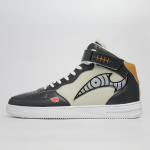
These exact qualities — high contrast, geometric precision, controlled intensity — are what make the Bloodsport aesthetic translate so effectively to physical fashion. The CS:GO Bloodsport MidStrides take this iconic design language and apply it to a handcrafted sneaker that captures the same energy you feel when you pull out the Bloodsport in-game.
Gaming Culture Meets Streetwear
The convergence of gaming and fashion is not a niche phenomenon — it is a global cultural shift. Luxury brands have entered the gaming space (Louis Vuitton designed skins for League of Legends). Gaming-inspired fashion lines have launched from both indie creators and major labels. And gamers themselves have become style influencers, with streamers’ outfits driving sales the way athletes’ wardrobes once did.
In India, this convergence is happening fastest in cities with strong gaming cultures — Hyderabad, Bangalore, Mumbai, and Delhi. Indian CS:GO and Valorant communities, which number in the millions, represent a massive audience that is hungry for fashion that reflects their digital identity.
Think about it: you spend hours customizing your in-game appearance. You trade skins, discuss aesthetic choices on Reddit, and judge other players by their loadouts. Why would that sensibility stop when you close the game? It does not. And that is why gaming merch — real, wearable, quality gaming merch — is a natural extension of gaming culture.
Beyond Counter-Strike: The Broader Gaming Aesthetic
CS:GO skins are the most obvious example, but the gaming-to-fashion pipeline extends across the entire gaming landscape.
Cyberpunk aesthetics: Games like Cyberpunk 2077 and their neon-heavy, tech-noir visual language have influenced streetwear globally. Techwear — functional, futuristic clothing with lots of zippers, straps, and dark tones — owes much of its current popularity to gaming aesthetics.
Colour palettes from game UI: The specific greens of Xbox, the blues of PlayStation, the red of Nintendo — these colours have become fashion signifiers. Wearing a particular shade of green is not just wearing green; to a gamer, it is a statement of allegiance.
HUD-inspired graphics: Health bars, ammo counters, and minimap-inspired designs appearing on t-shirts and accessories. This meta-design approach — wearing the interface rather than the character — is a uniquely gaming contribution to fashion.
Esports team merch: Team jerseys and branded gear from organizations like Team Liquid, FaZe Clan, and Indian teams like Global Esports have become streetwear staples in gaming communities. The aesthetic is sporty, tech-forward, and proudly nerdy.
Why Gaming Merch Is Different From Anime Merch
While both gaming and anime merch express fandom through fashion, they operate on different visual principles.
Anime merch is character-driven. You wear it because you love Naruto, Goku, or Luffy. The appeal is emotional — a connection to a character’s story and values.
Gaming merch is design-driven. You wear it because the Bloodsport pattern looks incredible, or because the Fade gradient is aesthetically perfect. The connection is visual and experiential — it reminds you of moments in-game, of clutch rounds and satisfying headshots.
This difference matters for styling. Anime sneakers are conversation starters (“Oh, you watch Demon Slayer?”). Gaming sneakers are aesthetic statements (“Those look sick, where did you get them?”). The CS:GO Bloodsport MidStrides appeal to both gamers who recognize the skin and non-gamers who simply appreciate bold design.
Styling Gaming Merch for the Real World
Gaming-inspired fashion follows slightly different rules than anime streetwear. Here is how to do it right:
Lean into the techwear adjacent look. Gaming aesthetics naturally complement techwear silhouettes. Black cargo pants, a dark zip-up jacket, and the Bloodsport MidStrides create a look that feels like you stepped out of a cyberpunk setting — in the best way.
Use the sneaker’s colour palette as your guide. The Bloodsport’s red-white-black scheme makes styling easy. Wear any combination of those three colours and the outfit coheres automatically. A red accent — a watch strap, a bag, a cap — ties everything together.
Avoid literal gaming references in clothing. Do not pair gaming sneakers with a gaming graphic tee. That is the equivalent of wearing a band tee to see the band — technically fine, but stylistically redundant. Let the sneakers speak. Keep everything else clean and minimal.
Mix gaming and non-gaming pieces. The goal is to look like someone with great taste who happens to game, not like someone who only owns gaming merchandise. A tailored bomber jacket over a plain tee with Bloodsport MidStrides says more about your style than a full head-to-toe gaming outfit.
The Indian Gaming Fashion Market
India’s gaming market is projected to exceed $8 billion by 2027, with over 500 million gamers. The fashion segment of this market is still nascent — which means opportunity.
Currently, most gaming merch available in India falls into two categories: cheap, generic stuff from marketplace sellers (think pixelated prints on thin cotton) and overpriced imports from international brands. The middle ground — quality, locally produced gaming fashion at fair prices — is severely underserved.
This is where products like the CS:GO Bloodsport MidStrides fit. Handcrafted in India, designed with genuine understanding of gaming aesthetics, and priced at Rs. 2,699 (Rs. 2,499 when you pay online) with free shipping nationwide. No import markups. No questionable quality. Just a product made by people who understand both gaming and fashion.
From Pixels to Pavement
The line between virtual and physical identity has been blurring for years. The clothes you choose in a character creator, the skins you equip, the aesthetic you cultivate online — these are all expressions of the same impulse that drives fashion in the physical world. Gaming merch does not translate virtual design to reality. It recognises that both spaces were always part of the same continuum.
The Bloodsport AK-47 looks incredible in your hands in-game. The Bloodsport MidStrides look incredible on your feet in the real world. Same design language. Same identity. Different medium.
Get the CS:GO Bloodsport MidStrides and bring your favourite skin to life.
Related Posts